Lake Lily Island Restoration Update - Spring 2026
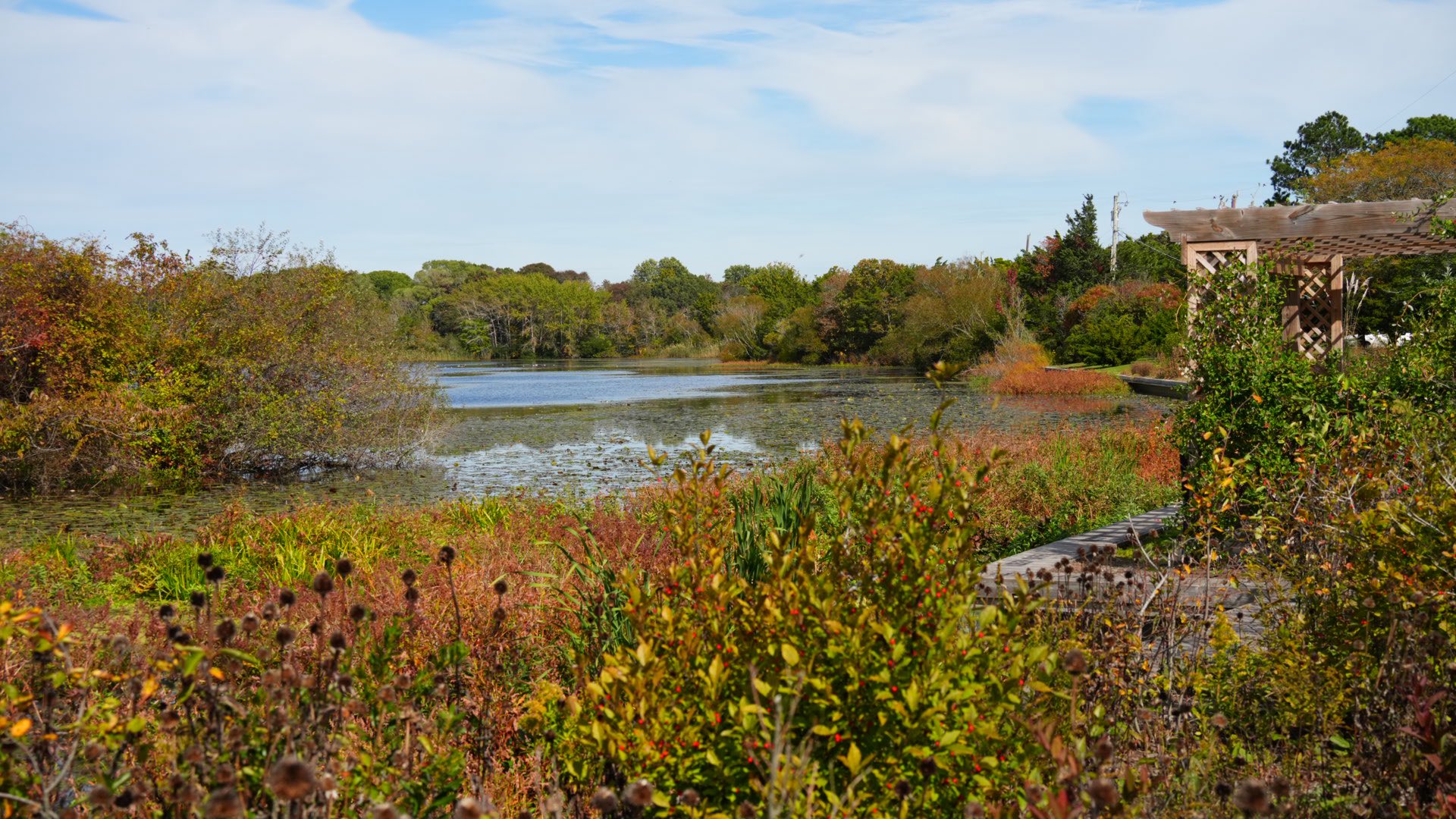
Lake Lily Island Restoration Update - Spring 2026
Friends of Lake Lily has been working closely with the Borough of Cape May Point in honoring our mission to protect the health and wellbeing of the lake.
🧪 Improving Water Quality: Tackling the Muck
Over the years, several inches of muck have accumulated on the lake bottom, caused by wood waste, animal droppings, stormwater runoff, and decaying invasive vegetation. This buildup increases phosphorus levels and can trigger Harmful Algae Blooms (HABs), which appear as bright green surface slime and are dangerous to humans and animals.To address this, the Borough has renewed its partnership with Cleanflo-, which provides:
- Regular waterquality testing-
- Sonar measurements of muck depth
- Nonchemical enzyme treatments applied 4–5 times per year, including a winter treatment-
- Maintenance of 11 bubblers that circulate enzymes throughout the lake
These treatments help break down muck naturally and support a healthier aquatic ecosystem. Lake Lily also serves as a critical stormwater basin for Cape May Point, receiving runoff from all borough drains and helping protect the community during severe weather events.
🌱 Muck Mats: A Promising NonChemical Solution
Invasive vegetation has expanded rapidly across the south end of the lake. Although it dies back in winter, it resurges aggressively in warm months. Because the roots are embedded in the muck, the Borough sought a nonchemical method to suppress growth. After extensive research, 36 muck mats were installed as a pilot project. These mats block sunlight from reaching dormant roots, preventing vegetation from emerging at the surface. Early results are encouraging:
- Test areas show clear water
- No invasive vegetation is growing above the mats
- The approach may be expanded to other areas of the lake
This project was jointly funded by Friends of Lake Lily and the Cape May Point Taxpayers Association.
📜 A Look Back: The 1992 Restoration
Many longtime residents may remember the 1992 communitywide restoration effort, which focused on shoreline beautification, water quality, and revitalizing the island. That- project set the stage for today’s renewed commitment to lake stewardship.
🌳 Island Restoration: A Fresh Start for Wildlife & Ecology
The island has long struggled with dense invasive vegetation, which restricts wildlife access and contributes to muck as it decays. Initial plans called for selective thinning, but inspection revealed that 90% of the vegetation was invasive and needed to be removed. A planned controlled burn by the New Jersey Forestry Service was canceled due to persistent damp conditions. Instead, the Borough hired a resource to the cut to ground level the invasive vegetation. On May 20 and 21, Appletree Landscaping of Haddon Heights was hired to remove debris and roots. All material was transported by boat from the island to the street. With the island cleared, a black plastic barrier has now been installed on the island surface to prevent regrowth. This creates a blank canvas for a three-phase rejuvenation project, which is currently being planned. Updates will be shared with the community and posted here on the Friends of Lake Lily website. This island project was also jointly funded by Friends of Lake Lily and the Cape May Point Taxpayers Association.
💬 We Welcome Your Ideas
Community input is essential as we plan the next phase of island restoration.
Please send your ideas to tomreilly@friendsoflakelily.org.
📈 Ongoing Lake Management & Education
Lake Lily’s health is influenced by weather, climate change, drought, stormwater runoff, wildlife activity, and aquatic weed growth. Friends of Lake Lily will continue collaborating with the Borough and the Cape May Point Taxpayers Association to ensure consistent monitoring and responsible management. Representatives from all three organizations recently completed a Rutgers lake management- course, strengthening our ability to evaluate non-chemical solutions and interpret annual water-quality data. With this knowledge under our belts, we are better prepared to research alternatives for non-chemical solutions.
💛 Support the Work
Your financial support is vital to sustaining these restoration efforts and future projects. Donations may be made through the Friends of Lake Lily website or by scanning the QR code below.
Tom Reilly
President, Friends of Lake Lily
Scan here to donate